


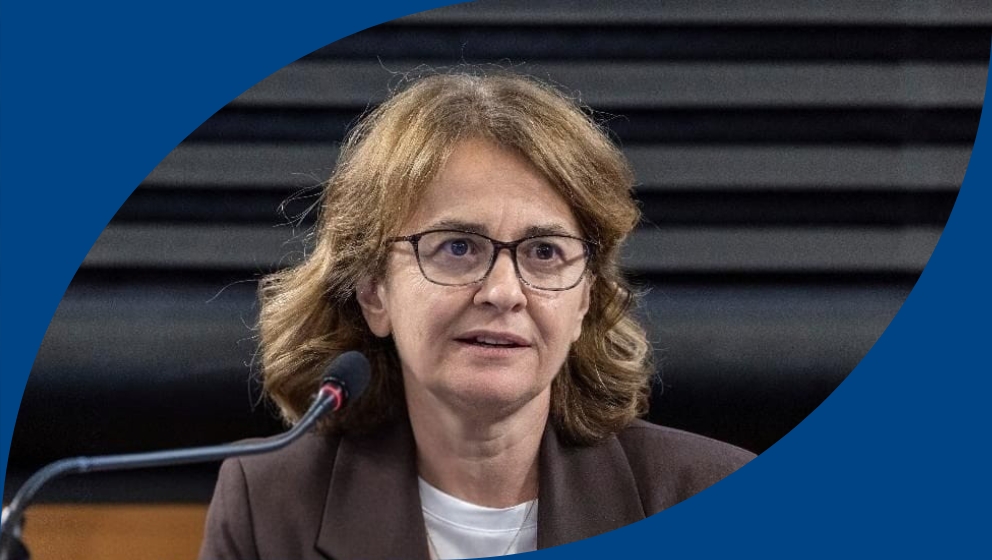
ASERI was one of the most important and enlightening experiences of my academic career. It really helped guide my career and many of the companions I met then are still part of my personal and professional life. Even after all these years, ASERI remains a place of critical thinking, continuous learning and meaningful dialogue between generations and disciplines.
I had the honor of participating in the celebrations for the thirtieth anniversary of ASERI and of sharing my personal vision on the main challenges of the coming years, which are increasingly numerous, complex and interdependent both nationally and internationally.
In my area of expertise, one of the areas of increasing tension is the role of online platforms and their regulation. The presence – or absence – of a legislative framework for these operators has important implications for political and trade relations, particularly in the transatlantic area.
Big Tech has grown "practically like new East India Companies", to quote the words of the President of the Republic Sergio Mattarella at the recent 51st edition of the Ambrosetti Forum in Cernobbio. Today, they influence – and sometimes even shape – the agenda of governments and national authorities, exercising powers that should belong to states and international organisations. Based primarily in the United States and protected by both Democratic and Republican administrations, these global corporations operate under an outdated legislative framework, namely the Digital Millennium Copyright Act of 1996 and the Communications Decency Act of the same year, which grant them exemptions from liability.
The situation is very different in the EU, where there has long been a double standard of regulation: on the one hand, the paradox of an over-regulated European audiovisual industry; on the other, a sector of digital platforms almost completely devoid of rules.
The paradox of gold-plating. Since 1989, the European audiovisual sector has been subject to stringent and pervasive regulation. National and European institutions have imposed strict antitrust rules to prevent vertical and horizontal mergers between media operators. Added to this were obligations to produce cultural and informative content – even when economically unsustainable – as well as direct editorial responsibility for all broadcast content.
The seemingly noble goal was to ensure pluralism, cultural diversity and consumer protection through editorial responsibility. However, the systemic effect has been the opposite: the excessive weight of regulation has stifled the emergence of European players capable of growing on a global scale and competing on an equal footing with the tech giants, which instead thrived in a de facto deregulated ecosystem.
For over fifteen years, national and European regulators have shown a kind of "infatuation", intervening late, with extreme caution and through non-binding or self-regulatory rules (such as codes of conduct) on crucial issues such as market concentration and content responsibility.
Meanwhile, US Big Tech has consolidated its dominance thanks to economies of scale, network effects and sophisticated lobbying efforts, which have further weakened any real European regulatory ambition – particularly in areas such as protecting minors online, combating disinformation and hate speech.
Until 2021, central issues such as algorithmic governance, competitive fairness, content transparency, taxation, and copyright protection remained largely unresolved.
Even the most recent legislative interventions – the Digital Services Act and the Digital Markets Act, the Media Freedom Act and the AI Act – real achievements in the defense of democracy, editorial pluralism and the promotion of our shared culture, risk a late and ineffective application.
This situation stems from two main factors:
A regulatory asymmetry: the business model of traditional media is well-defined, responsible and therefore more easily adjustable.
A deep-rooted cultural prejudice: for decades, television – especially commercial television – has been portrayed as the "big brother", a potentially dangerous medium, capable of shaping public opinion and conditioning minds: a threat to democracy.
On the contrary, the internet and digital platforms were idealized as tools of democratic freedom and empowerment: open and horizontal spaces where every voice could express itself and be heard.
The reality, however, turned out to be different. From the Cambridge Analytica scandal we have learned that digital platforms can be tools of manipulation, polarization and disinformation, driven by opaque algorithmic mechanisms, anonymous interactions and profit-oriented models.
Despite the many announcements of decline and rapid technological changes, television remains a resilient part of the media landscape, a familiar presence in our homes and community life. It continues to be the only public space still subject to clear editorial responsibility and authentic ethical control.
What challenges await us? We must regain control over an international system marked by disorder and the "algocratic" drift, to which we are increasingly delegating the management of political and social issues.
The recent and sudden change in U.S. policy toward its Western allies puts Europe in a position of urgency. It is necessary to translate the EU's regulatory ambitions into concrete and enforceable actions, simplifying and modernising our complex – but essential – legal framework, to respond to the challenges of the Fourth Industrial Revolution.
I am convinced that today, more than ever, it is essential that human beings remain the driving force at the heart of change. Institutions like ASERI have an increasingly crucial responsibility: to continue to prepare future leaders to understand complexity and to act with competence, ethics and courage.
Thanks to its unique qualities, the strength of its network, leadership and prestige, ASERI is ideally positioned to continue to play a fundamental role in the years to come – as it has always done – by offering academic excellence and fostering the development of critical, interdisciplinary and intercultural skills.