


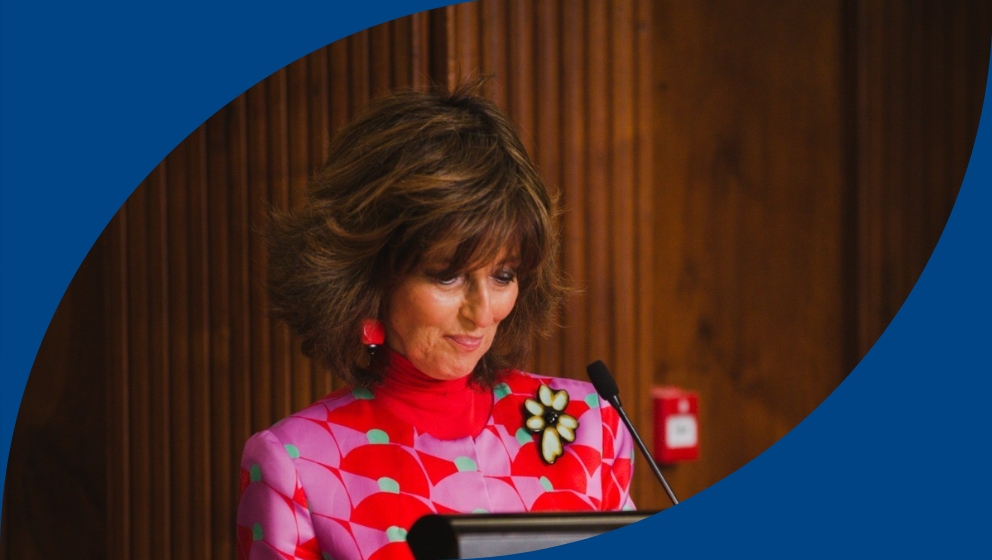
The decisive role that culture and cultural diplomacy can play in conflict prevention and in the search for security and sustainable development, in such complex times, must be considered urgently. This perspective was first articulated by Federica Olivares in her capacity as Special Adviser to the European External Action Service (EEAS) for EU Public Diplomacy, when she presented it as a keynote speech at the Annual Assembly of EU Ambassadors in Brussels. Its resonance was such that the United Nations Department of Economic and Social Affairs (UN-DESA) requested the text for publication ahead of the Summit for the Future in September 2024, underlining the growing importance of culture in global security debates.
The cultural dimension of Security has always been central in the post-Cold War period, but it has become particularly relevant since the late 1980s, leading to a reconfiguration of the field of Security from material and military factors towards cultural and symbolic forms of distinctiveness and global influence. From a systems perspective, the assumption is that an international society can only be stable and sustainable as long as its members agree on a set of fundamental values that guide their actions. Culture acts as a transmission belt that spreads resilience in times of crisis and as a stabilizer in international relations. To unleash the potential of Security Culture and translate it into effective policies and actions, five priorities appear urgent today:
1. Guarantee the right to culture as an intrinsic component of human rights and sustainability
Although aware of the complexity of the concept of "cultural rights" and its different interpretations in various contexts, it is undeniable that the wave of conflicts in the world and the erosion of democratic practices are producing a massive, though often unnoticed, erosion of people's right to culture in all its aspects: from access to participation and production, to free expression and personal enjoyment and enrichment through experiences that determine our development as human beings and our connection to humanity and its destiny. The deep cultural vacuum induced by wars – with the consequent destruction of cultural heritage, and therefore of the memory and identity of peoples – together with the more subtle attack on cultural expression and diversity by non-democratic governments, is producing a global backsliding that needs immediate international awareness.
2. Reputational security
"From Soft Power to Reputational Security: refocusing Public Diplomacy for a dangerous world", as Prof. Nick Cull defines it in his latest book, marks a paradigm shift that also concerns the role of Culture in international relations. By Reputational Security, Cull means that "if and when a country is well regarded and considered relevant by international public opinion, it copes better with moments of crisis than unknown states. Reputational Security is a place on the high ground of the global imagination; It means that when a challenge comes – whether it's from a neighbour challenging sovereignty, internal secession or rising sea levels – the world cares." It proves to be both preventive and counteractive, helping to neutralize the false narratives about countries and peoples so prevalent in the global media space.
3. Diaspora Diplomacy
It is a growing area of Reputational Security, with multidirectional aspects. Diasporas can act as transnational actors, projecting positive and alternative images and narratives of their homelands, cultures and histories on different media platforms. Interesting, in this regard, are the new Instagram and X, @netflixgolden accounts, which celebrate the stories of the pan-Asian diaspora on Netflix. In building new reputations for diasporas, museums can play a crucial role, as they have become reliable diplomatic actors, with increasing practices of intercultural dialogue and enhancement of the cultural expressions of countries at risk.
4. Sport Diplomacy
The exponentially growing relevance of sport in building bridges, promoting social inclusion, generating educational opportunities by bringing out new talents and supporting sustainable development must be exploited much more as a powerful tool of international relations. Recent major sporting events in various parts of the world have highlighted the role of sport in addressing many factors of conflict, such as structural inequalities, due to its positive impact in such contexts. These events testified to the importance of sport for sustainable development, especially in the educational, health and even technological fields, as well as its ability to facilitate peacebuilding, given the emphasis on cooperation, team spirit and social cohesion.
5. Artists as agents of change in the new global imagination
The effectiveness of contemporary art and young artists in imagining new scenarios on "How will we live together?" is still greatly underestimated. On the contrary, there is an urgent need for the new visions of artists in times when the imagination of our future is shrinking. To achieve this, a radical overhaul of funding strategies in the field of contemporary art is needed, bringing more creative experimentation into dialogue with critical thinking through truly innovative programs. As Kathryn Weir, co-director of the Lagos Biennial, put it: "Artists are moving globally beyond the idea of the work as an end in itself, towards the fabrication of generative models and prototypes to activate new possibilities and realities in the world."
If the five priorities outlined above are crucial for a Culture for Security strategy in these difficult times, the question arises: where will the funding for the necessary actions come from? One promising avenue is to expand collaboration with the private sector within the environment, social, governance (ESG) framework. Large global investment funds – today the main shareholders of multinationals – have imposed strict and binding ESG compliance rules for listed companies. As a result, more and more companies are looking for socially impactful ESG projects to invest in. This macro-trend of the financial markets could prove crucial to finance inclusive projects even in difficult regional areas, within the broader PPE (public-private enterprise) framework, thus increasing the creation of shared social value.